

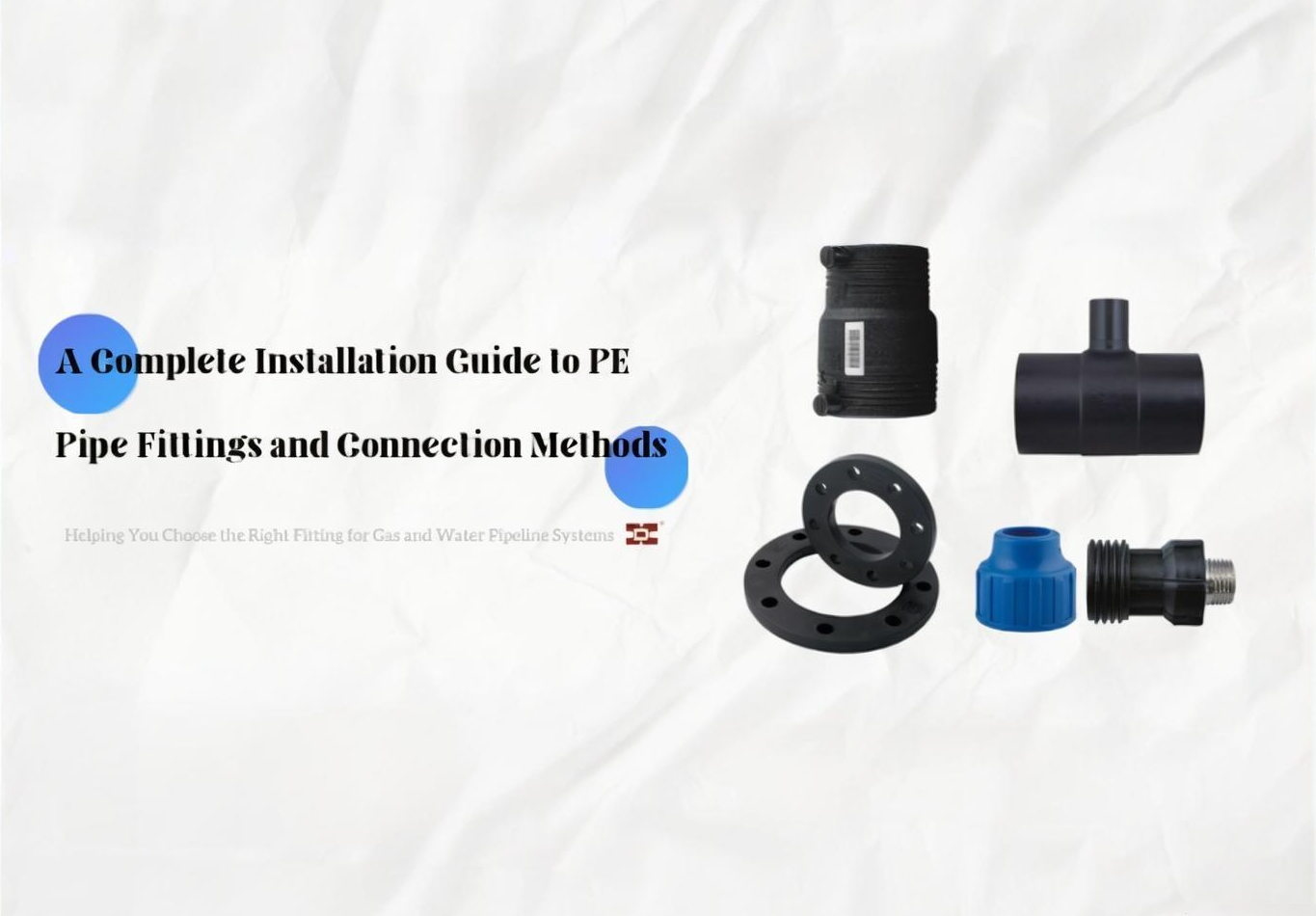

Helping You Choose the Right Fitting for Gas and Water Pipeline Systems
Polyethylene (PE) piping systems are widely used in gas distribution and water supply projects due to their corrosion resistance, flexibility, long service life, and reliable joint performance. However, the overall safety and durability of a PE pipeline system depend not only on the pipe itself, but also on the correct selection and installation of fittings and connection methods.
This guide provides a practical overview of the most commonly used PE pipe fittings and jointing technologies, helping engineers, contractors, and distributors better understand how different systems are applied in real projects.
About Zhejiang Xinda Plastic Pipe Fitting Co., Ltd.
Founded in 2001, Zhejiang Xinda Plastic Pipe Fitting Co., Ltd. is a specialized manufacturer of polyethylene (PE) piping systems for gas and water supply applications.
With more than two decades of industry experience, Xinda focuses on producing stable, standards-compliant PE fittings that meet the requirements of modern municipal and utility pipeline networks.
Overview of Common PE Pipe Connection Methods
In gas and water pipeline projects, PE fittings are typically connected using four main technologies:
- Electrofusion
- Butt Fusion
- Socket Joint (Socket Fusion)
- PE / Steel Transition Connections
Each method serves different installation environments, pressure requirements, and project constraints.
1. Electrofusion Fitting Series
What Is Electrofusion?
Electrofusion is a connection method that uses embedded resistance wires inside the fitting. When electric current is applied through a fusion control unit, the internal wire heats up, melting both the fitting and the pipe surface to form a homogeneous joint.
Typical Products:
- Electrofusion Coupler
- Electrofusion Elbow
- Electrofusion Tee
- Electrofusion Reducer
- Electrofusion End Cap
Installation Key Points:
- Pipe surface preparation
Remove oxidation layers and clean the pipe thoroughly. Surface preparation is critical to joint quality. - Accurate alignment
Pipes must be fully inserted and fixed to prevent movement during fusion and cooling. - Controlled fusion parameters
Fusion time and voltage must follow the fitting manufacturer’s specifications. - Cooling period
Do not disturb the joint until the full cooling time has elapsed.
Application Scenarios:
- Gas distribution networks
- Water supply systems with limited installation space
- Repair and maintenance projects
Electrofusion fittings are often chosen where on-site conditions restrict the use of large fusion machines or where high joint reliability is required.
2. Butt Fusion Fitting Series
What Is Butt Fusion?
Butt fusion connects pipes and fittings by heating the ends with a heating plate and pressing them together under controlled pressure. Once cooled, the joint forms a continuous, leak-free structure.
Typical Products:
- Butt Fusion Elbow
- Butt Fusion Tee
- Butt Fusion Reducer
- Butt Fusion End Cap
Installation Key Points:
- Accurate facing and alignment
Pipe ends must be perfectly square and aligned to ensure uniform fusion beads. - Heating and dwell time control
Heating temperature and dwell time must comply with PE material standards. - Fusion pressure management
Excessive or insufficient pressure may weaken the joint. - Visual inspection
Uniform fusion beads indicate a proper joint.
Application Scenarios:
- Long-distance water transmission pipelines
- Municipal infrastructure projects
- High-pressure pipeline systems
Butt fusion is widely used for its strength, consistency, and cost efficiency in large-scale installations.
3. Socket Joint Series (Socket Fusion)
What Is Socket Fusion?
Socket fusion involves heating the pipe and fitting socket simultaneously, then inserting the pipe into the fitting to form a fused joint.
Typical Products:
- Socket Fusion Coupling
- Socket Fusion Elbow
- Socket Fusion Tee
- Socket Fusion Union
Installation Key Points:
- Correct heating depth
Pipes must be inserted to the specified depth during heating and fusion. - Avoid rotation
Do not rotate the pipe after insertion, as this can compromise joint integrity. - Consistent heating time
Overheating or under-heating can lead to weak joints.
Application Scenarios:
- Small-diameter pipelines
- Indoor or confined installation environments
- Branch connections in water and gas systems
Socket fusion fittings are valued for their ease of installation and compact structure.
4. PE / Steel Transition Fittings
Purpose of PE / Steel Transition:
PE / steel transition fittings are used when polyethylene pipelines need to connect with steel valves, flanges, or existing metal pipelines. These fittings ensure a secure and pressure-resistant transition between different materials.
Typical Products:
- PE / Steel Transition Pipe
- PE / Steel Transition Coupling
- Steel Threaded Transition Fitting
Installation Key Points:
- Proper sealing on steel side
Use appropriate thread sealant or flange gaskets. - Avoid stress concentration
Ensure alignment to prevent mechanical stress at the transition point. - Corrosion protection
Steel components should be protected according to project standards.
Application Scenarios:
- Gas pressure regulation stations
- Valve chambers
- Industrial and municipal pipeline interfaces
How to Choose the Right Fitting for Your Project
When selecting PE fittings and connection methods, consider the following factors:
- Medium type (gas or water)
- Operating pressure
- Pipe diameter
- Installation environment
- Project standards and local regulations
A well-matched fitting not only simplifies installation but also extends the service life of the entire pipeline system.
Final Thoughts
Understanding the differences between electrofusion, butt fusion, socket fusion, and PE / steel transition fittings allows project teams to make informed decisions and avoid common installation issues.
At Zhejiang Xinda Plastic Pipe Fitting Co., Ltd., we focus on providing reliable PE fitting solutions designed for real-world gas and water supply applications. By combining proper product selection with correct installation practices, pipeline systems can achieve long-term safety and performance.
If you need technical support or product recommendations for your specific project, selecting the right fitting from the beginning is always the most efficient approach.
 WhatsApp
